Mapping biometric verification timelines against access windows for progressive jackpot networks on regulated portable platforms
Amir Jung · Jun 1, 2026
Mapping biometric verification timelines against access windows for progressive jackpot networks on regulated portable platforms
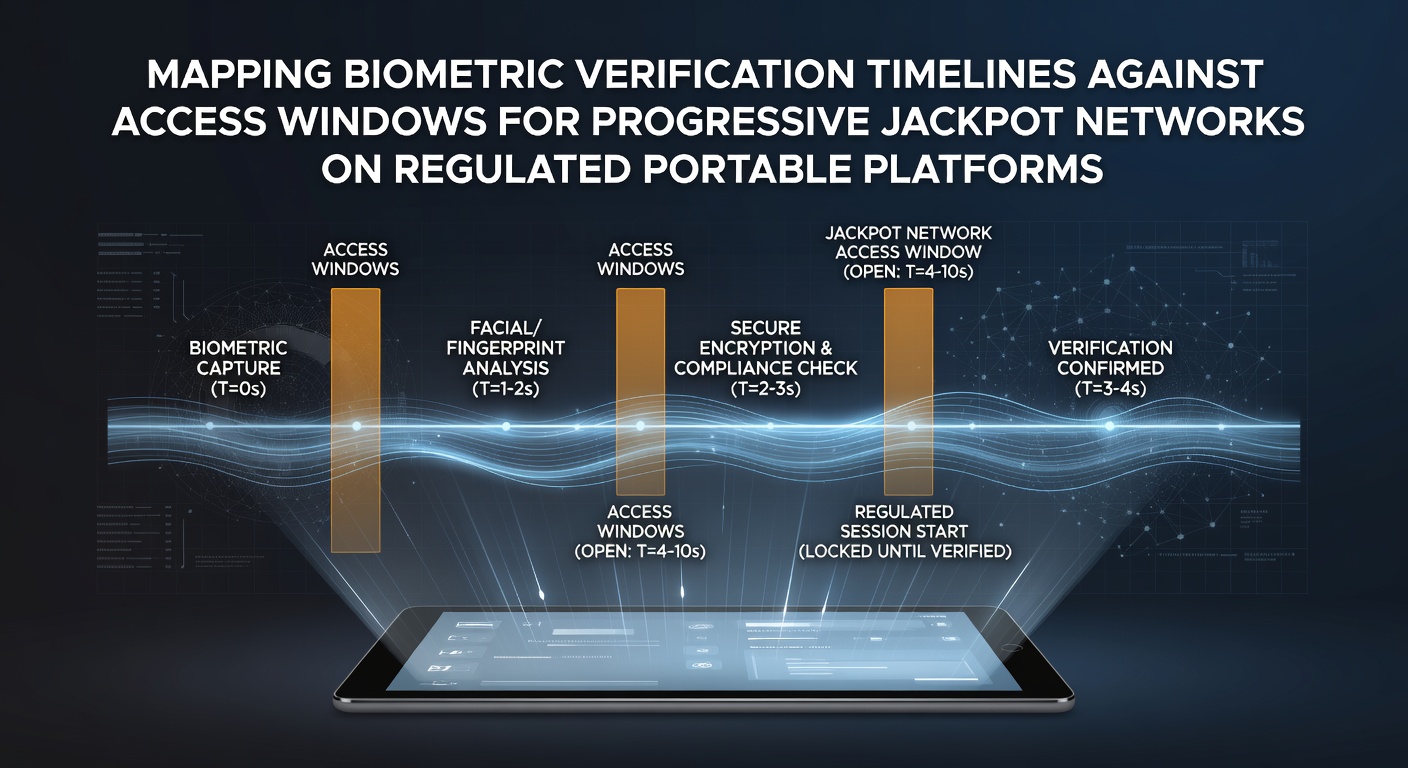
Biometric verification processes on regulated portable platforms integrate fingerprint, facial recognition, and voice authentication systems to confirm player identity before granting entry to progressive jackpot networks, and these processes operate within defined access windows that limit connection durations to maintain network integrity across multiple jurisdictions.
Data from mobile platform operators in 2026 shows average verification completion times ranging from 1.8 to 4.2 seconds depending on device hardware, network conditions, and the specific biometric modality selected, while access windows for progressive jackpot participation typically span 45 to 120 seconds before re-authentication becomes mandatory.
Regulatory frameworks shaping verification requirements
Multiple gaming control bodies enforce standards that tie biometric timelines directly to jackpot network access protocols, with the New Jersey Division of Gaming Enforcement publishing compliance metrics that document how platforms must complete identity checks within the first 30 percent of any active access window to prevent unauthorized entries. These rules emerged from updates finalized in early 2026 and apply uniformly to applications running on iOS and Android devices connected to centralized progressive systems.
Canadian provincial regulators in Ontario and British Columbia adopted similar mapping requirements during the same period, requiring operators to log verification-to-window ratios for every jackpot session initiated on portable hardware. Observers note that platforms failing to maintain sub-five-second verification averages face automatic session termination protocols designed to protect jackpot pool integrity.
Technical mapping of timelines to access windows
Engineers align biometric processing pipelines with access window parameters through layered timestamping that records the moment a player initiates a jackpot connection, the duration required for multi-factor biometric matching, and the remaining window capacity after successful verification. Studies conducted by Gaming Laboratories International during Q2 2026 revealed that facial recognition systems on newer portable devices consistently outperformed fingerprint methods by 0.7 seconds on average when network latency stayed below 35 milliseconds.
Platforms segment access windows into distinct phases where the initial 15 seconds accommodate device sensor calibration and liveness detection, the middle segment handles cryptographic handshakes with the progressive network, and the final portion reserves buffer time for potential re-verification if the session extends. This phased approach prevents overlap between individual player verifications and collective jackpot contribution cycles that update every 12 seconds across linked machines.
Device-specific performance variations
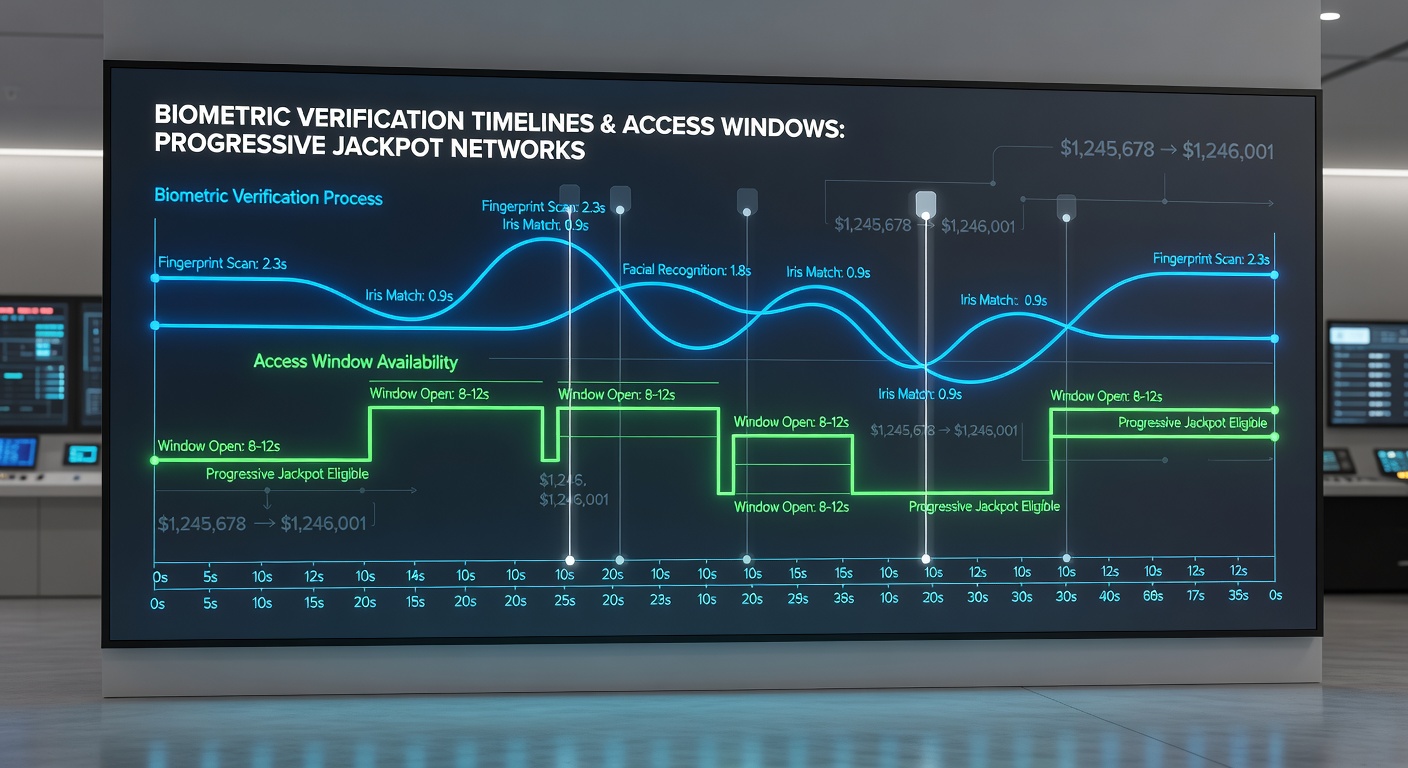
Portable platforms exhibit measurable differences in biometric processing speeds based on chipset generation and operating system version, with flagship 2025 and 2026 model smartphones completing full verification sequences in under three seconds while older devices require up to six seconds under identical network conditions. Operators adjust access window lengths dynamically through server-side configuration files that reference device capability databases updated monthly.
Research indicates that 5G connections reduce verification latency by 22 percent compared with 4G networks in field tests across urban test markets during June 2026, allowing platforms to shorten minimum access windows without compromising security thresholds. These adjustments appear in real-time analytics dashboards that track verification success rates alongside jackpot contribution volumes.
Integration challenges across jurisdictions
Cross-border progressive jackpot networks must reconcile differing verification timeline mandates imposed by separate regulatory authorities, creating mapping matrices that assign the strictest applicable standard to any given session. European platforms operating under Malta Gaming Authority guidelines, for instance, require documented verification completion within the first 25 seconds of an access window, whereas certain Australian state frameworks allow up to 35 seconds before mandatory re-check protocols activate.
Platform architects maintain separate configuration branches for each jurisdiction and apply geofencing logic that selects the appropriate timeline mapping upon session initiation. This architecture prevents regulatory conflicts while preserving uniform player experiences across devices registered in multiple regions.
Conclusion
Mapping biometric verification timelines against access windows continues to evolve as portable hardware capabilities advance and regulatory bodies refine their technical specifications. Operators track these alignments through centralized logging systems that feed compliance reports to oversight agencies on monthly schedules. The resulting data sets support ongoing refinements that balance security requirements with seamless access to progressive jackpot networks on regulated mobile platforms.