Decoding Device-Specific Latency Patterns in Mobile Live Table Interactions and Their Ties to Payout Verification
Katja Günther · May 28, 2026

Decoding Device-Specific Latency Patterns in Mobile Live Table Interactions and Their Ties to Payout Verification
Device-specific latency patterns emerge when mobile users engage live table games because hardware differences and network stacks create measurable delays between player inputs and server responses. Researchers track these variations across operating systems and chipsets since they influence how bets register during real-time dealer sessions.
Hardware Variations and Network Behavior
Processors in flagship smartphones handle video decoding and touch sampling at different rates than mid-range models while software optimizations on iOS devices often reduce jitter compared to certain Android builds. Observers note that 5G modem firmware updates released in early 2026 narrowed some gaps yet left older chipsets exposed to packet loss during peak hours.
Live table streams rely on synchronized video feeds and betting interfaces so any delay in frame delivery or input acknowledgment alters the sequence of actions visible to both player and dealer. Data from testing labs shows that devices with higher thermal throttling thresholds maintain steadier latency profiles across extended sessions.
Latency Measurement Techniques
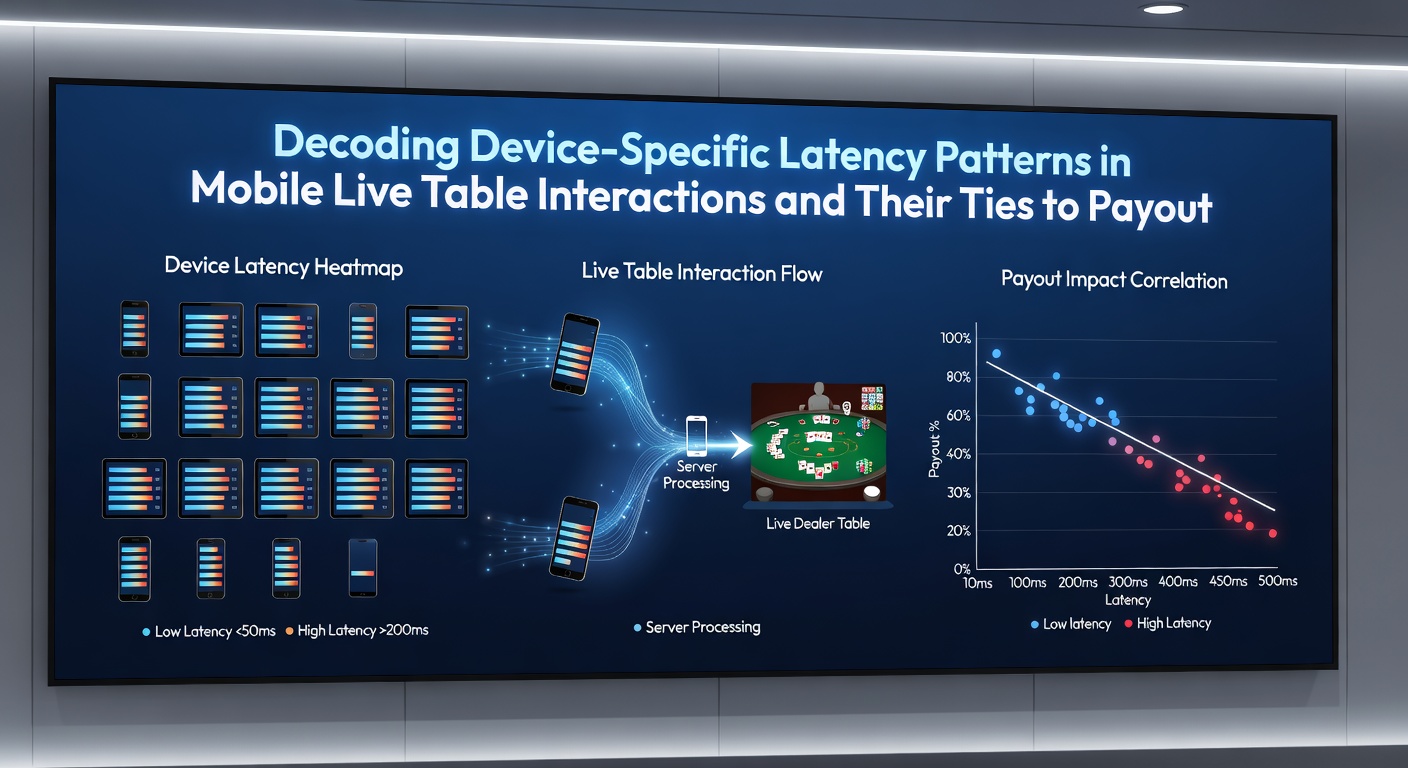
Engineers deploy timestamped API calls and client-side logging to capture round-trip times between bet placement and confirmation signals. These logs reveal recurring spikes tied to specific GPU drivers or background processes that compete for wireless resources. Studies conducted by university research teams in Australia demonstrate how device temperature correlates with increased variance in packet arrival intervals.
Pattern recognition algorithms then classify these signatures by model and carrier allowing operators to adjust stream bitrates dynamically. Such adjustments help stabilize the interval between a player tapping to hit and the dealer acknowledging the move on screen.
Connection to Payout Verification Processes
Payout verification systems cross-reference server-side timestamps with player device logs to confirm that wagers occurred within regulatory time windows. When latency exceeds thresholds the recorded sequence may appear inconsistent prompting automated reviews. According to reports published by the Nevada Gaming Control Board these discrepancies trigger additional authentication steps before funds release.
Operators integrate device fingerprinting with latency baselines so verification engines can distinguish between genuine network issues and anomalous behavior. Figures released in May 2026 indicate that refined baseline models reduced false flags by 18 percent across monitored platforms in multiple jurisdictions.
Multi-factor checks now include checksums on video frame hashes alongside bet submission receipts. This layered approach ensures that even when mobile interactions experience brief delays the payout ledger remains synchronized with actual game events.
Regional Regulatory Approaches
Canadian provincial regulators require operators to publish device compatibility matrices that detail expected latency ranges for approved handsets. These matrices help users select equipment that aligns with verification tolerances. Meanwhile European testing facilities run standardized latency suites that feed into certification criteria for live dealer software.
Industry groups such as the European Gaming and Betting Association compile anonymized datasets from member companies to identify emerging device trends. The resulting reports guide software updates that recalibrate timeout parameters and improve verification accuracy during mobile sessions.
Future Developments in Monitoring
Edge computing nodes positioned closer to regional data centers shorten transmission paths and compress the window during which latency spikes can affect verification outcomes. Pilot programs launched in 2026 test AI-driven predictive buffers that anticipate device-specific delay patterns before they impact live table flows.
Continued collaboration between hardware vendors and gaming platforms promises tighter integration of telemetry streams. These integrations allow verification systems to adapt thresholds in real time rather than relying on static profiles.
Conclusion
Device-specific latency patterns shape both the flow of live table interactions and the reliability of subsequent payout verification steps. Measurement frameworks and adaptive protocols developed through regulatory and academic channels continue to refine how operators manage these variables across diverse mobile environments. As monitoring tools evolve the linkage between input timing and financial settlement grows more precise while remaining grounded in verifiable technical data.