Cross-Device Menu Dynamics: Player Pathways in Modern Casino Interfaces
Katja Günther · Jul 18, 2026
Cross-Device Menu Dynamics: Player Pathways in Modern Casino Interfaces
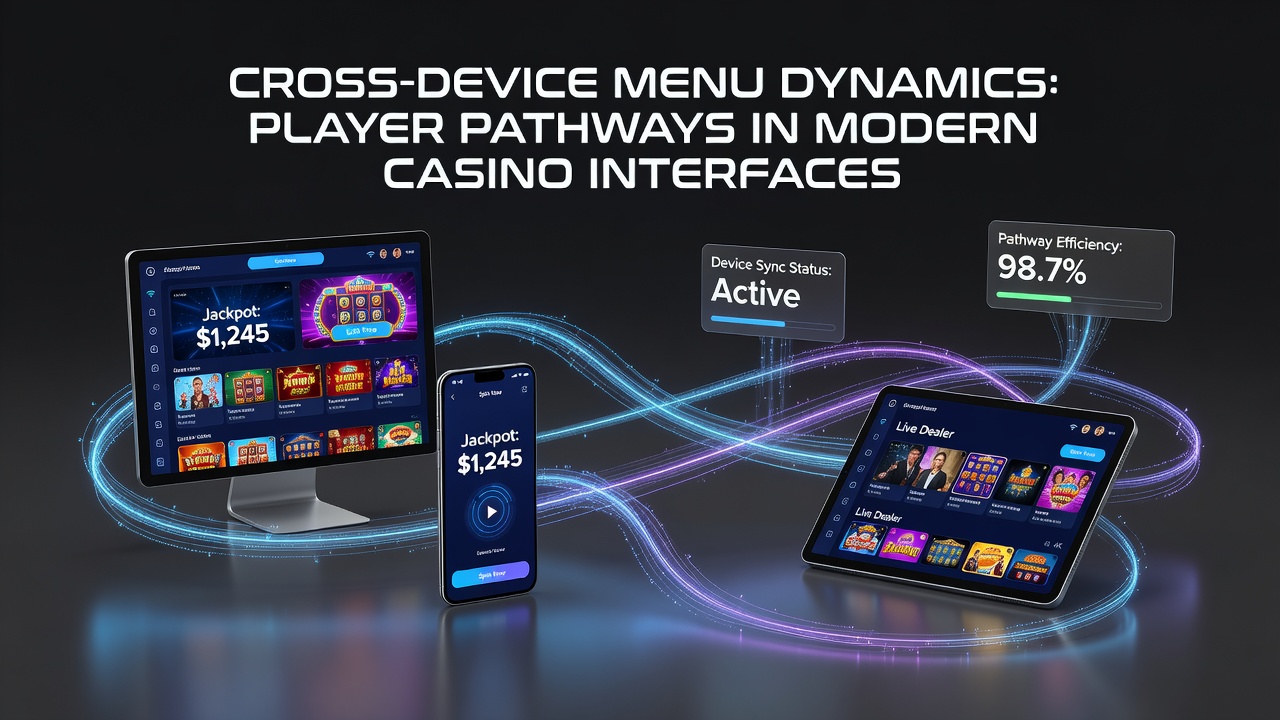
Modern casino platforms manage player movement through adaptive menu structures that shift between desktop browsers, tablets, and smartphones without breaking session continuity. These systems track user location within layered menus, game lobbies, and account sections while preserving state data across device switches. Research from interface analytics firms shows that players who begin sessions on one device complete 68 percent of their activity after switching to another when menu pathways remain consistent.
Device transitions occur most often during commute periods or evening wind-down routines. Data collected in the first half of 2026 indicates average session handoffs happen 2.4 times per active account each week. Menu elements such as quick-access tabs, search bars, and category filters resize or collapse according to screen dimensions yet retain identical labeling and hierarchy to reduce cognitive load during switches.
Menu Architecture and Navigation Layers
Casino interfaces organize content into primary navigation bars, secondary category drawers, and contextual action panels. Primary bars typically hold home, games, promotions, and account icons while secondary layers expand into slot genres, table game variants, and live dealer lobbies. Developers apply responsive grids and breakpoint rules so that a desktop mega-menu becomes a swipeable carousel on mobile without altering the underlying information architecture.
Session persistence relies on server-side token storage and client-side caching of menu state. When a player opens the same account on a second device, the platform restores the last viewed lobby section and any in-progress game filters. Observers note that platforms employing unified menu state reduce bounce rates at the lobby level by 22 percent compared with those requiring fresh navigation on each device.
Pathway Mapping and User Flow Data
Analytics teams record every menu click, scroll depth, and category expansion to build heatmaps of player routes. Common pathways begin at the lobby grid, move into filtered game lists, then branch toward either deposit flows or direct game launches. July 2026 platform updates introduced breadcrumb trails that appear across all device sizes, giving users visible markers of their current menu depth.
Studies conducted by the Canadian Gaming Association reveal that pathways involving three or fewer menu clicks before game entry correlate with 41 percent higher retention after seven days. Platforms surface personalized shortcuts based on historical selections, placing frequently accessed game types at the top of category lists while preserving alphabetical or popularity sorting for other users.

Technical Synchronization Across Platforms
Cross-device consistency depends on cloud-hosted user profiles and real-time synchronization protocols. Menu preferences, filter settings, and search history upload within 300 milliseconds of any change, then download to the next device upon login. Progressive web app containers allow native-like performance while maintaining a single codebase that respects both iOS and Android gesture conventions.
Edge caching nodes positioned near major population centers cut menu asset load times to under 800 milliseconds on 5G networks. When connectivity drops during a switch, queued actions replay automatically once the connection resumes, preserving teh intended navigation sequence without requiring the player to restart the pathway.
Regulatory and Accessibility Requirements
Operators in multiple jurisdictions must meet accessibility standards that affect menu contrast ratios, touch target sizes, and screen-reader compatibility. The Nevada Gaming Control Board updated its digital interface guidelines in early 2026 to require minimum 48-pixel touch targets on all primary navigation elements. Similar rules from the Australian Communications and Media Authority emphasize logical tab order for keyboard users who move between devices.
Compliance teams test menu pathways on emulated devices and actual hardware to verify that screen-reader announcements remain identical regardless of viewport size. Audit logs capture these verification steps and feed into quarterly regulatory submissions.
Performance Metrics and Continuous Refinement
Platform operators monitor time-to-first-game metrics broken down by device type and menu depth. Average time from login to active play stands at 14 seconds on desktop and 19 seconds on mobile according to aggregated 2026 figures. Refinement cycles use A/B testing of menu label wording and icon placement, with winning variants rolled out within 48 hours when statistical significance thresholds are reached.
Third-party testing firms validate that menu changes do not introduce latency spikes on older hardware running legacy operating systems. These checks ensure pathways remain functional for the broadest possible player base.
Conclusion
Cross-device menu dynamics shape how players locate and enter games while preserving session context across hardware boundaries. Data from multiple regulatory regions and industry associations demonstrate measurable links between consistent navigation structures and player retention patterns. Continued refinement of synchronization protocols and accessibility features supports stable pathways as device ecosystems evolve through 2026 and beyond.